
How to Start a CNA School in New Hampshire (2026 Guide)
July 27, 2026 · New Hampshire
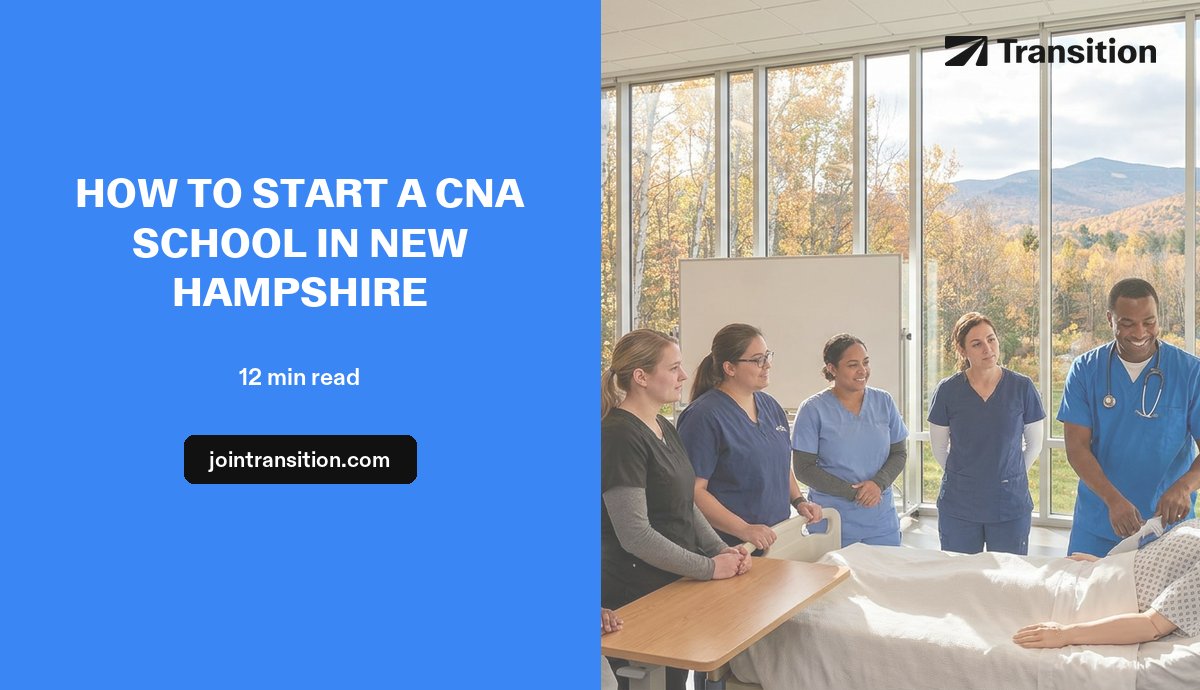
New Hampshire doesn't have CNAs. It has LNAs — Licensed Nursing Assistants — and the difference is more than branding. In New Hampshire, nursing assistants hold an actual license issued by the Board of Nursing under RSA 326-B, complete with a fingerprint background check, renewal requirements, and practice-hour minimums. That licensure model raises the credential's standing — and it raises the bar for the schools that train for it.
The demand side is compelling: New Hampshire has one of the oldest populations in the country, its long-term care facilities have struggled with aide vacancies for years, and the state's LNA pipeline runs almost entirely through Board-approved education programs. The supply side is where you need eyes open. New Hampshire's rules tell you to apply at least 12 months before you intend to start teaching, the application includes a genuine feasibility study, and a private tuition-charging school should plan on a career school license from the Department of Education on top of Board of Nursing approval. This is a state that rewards founders who plan like operators.
We work with CNA and allied-health schools every day on the operational side — enrollment, records, payments, messaging — and this guide lays out the New Hampshire path start to finish. The obligatory-but-sincere note: this is operator guidance, not legal advice. Verify current rules with OPLC and the other agencies named below, especially since the Nur 700 rules were in active rulemaking as recently as 2025.
New Hampshire LNA School Quick Facts
| Item | Detail |
|---|---|
| Total training hours | 100 minimum |
| Classroom / clinical split | 40 hours theory + 60 hours concurrent clinical (Nur 704.09); 16 specified hours before any direct care |
| Credential | Licensed Nursing Assistant (LNA) — a true state license |
| Approving agency | NH Board of Nursing, under the Office of Professional Licensure and Certification (OPLC) |
| Also likely required (private schools) | NH Dept. of Education, Office of Career School Licensing (RSA 188-G) unless an exemption applies |
| Application | Program approval package to the Board ≥12 months before implementation; $250 fee (2-year approval), $100 site-visit fee |
| Exam vendor | Excel Testing (written/oral + skills) — OPLC's listed competency testing agency |
| Registry | None — LNA licensure via the NH Online Licensing Portal ($38, 2-year license; fingerprint background check $47) |
| Typical time to approval | Rules say apply 12 months ahead; plan 6–12 months |
| Instructor rule (short version) | Coordinator: NH/compact RN, 2 years elderly/chronic-care experience incl. 1 year LTC, plus baccalaureate or Board-approved Train-the-Trainer. Instructors: same, or LPN meeting the experience and teaching criteria |
Step 1 — Form your business entity
New Hampshire business filings go through the Secretary of State's Corporation Division via the NH QuickStart portal (quickstart.sos.nh.gov). An LLC Certificate of Formation costs $100 (plus a $2 electronic processing fee online), and your name must include "Limited Liability Company" or "LLC."
Get a free EIN from the IRS and open a dedicated business bank account. If you end up needing the career school license (more below), you'll be posting a surety bond and reporting gross tuition — clean, separated finances from day one make all of that painless.
Step 2 — Register for state taxes
New Hampshire has no general sales tax and no tax on wage income — but businesses aren't tax-free. Once you have revenue and payroll, you'll deal with the Business Profits Tax and Business Enterprise Tax through the NH Department of Revenue Administration (thresholds apply; many small first-year schools fall under them), and you'll register with New Hampshire Employment Security for unemployment contributions when you hire instructors.
Step 3 — Secure your location, classroom, and skills lab
New Hampshire will look at your physical setup more than once: after initial approval, expect an on-site review at the one-year mark, self-assessment reports in non-visit years, program review summaries every two years, and site visits every four years thereafter. Build a classroom and skills lab that stand up to recurring scrutiny — beds, mannequins, wheelchair, transfer equipment, a working sink, vitals equipment, and supplies aligned to the skills your students will be tested on.
Size your clinical groups carefully: New Hampshire caps clinical instruction at 8 students per instructor — one of the tightest ratios in the country — and the instructor may have no other duties while teaching. That ratio drives your cohort economics more than rent does.
Step 4 — Apply for Board of Nursing program approval
New Hampshire's nursing assistant education rules live in Nur 704 (Chapter Nur 700), administered by the Board of Nursing under OPLC in Concord. Two things distinguish this state's application.
The 12-month rule. Nur 704.02 and 704.03 direct applicants to apply at least 12 months before program implementation, and approval must be in hand before you start teaching. In practice this makes New Hampshire one of the longest-runway states — plan your lease and hiring around it rather than fighting it.
The feasibility study. The submission package includes a comprehensive feasibility study: documented need and demand in New Hampshire, the impact on existing programs in your region, your hiring plan, where students will come from, and cooperating clinical agencies with letters of intent. Alongside it: coordinator and instructor credentials, program philosophy and outcomes, curricular organization, course and unit objectives, course outlines, the schedule of classroom and clinical hours, instruction and evaluation methods, clinical experiences and cooperating agencies, program policies, and a written narrative tying it together.
Fees are modest under the OPLC fee schedule effective July 2025: $250 for program approval (initial, renewal, or reinstatement — approval runs two years) and $100 for site visits. Separately, each clinical site needs its own Board approval — the Application for Board Approval of a Cooperating Agency for LNA/MNA Education is due at least 3 months before students are placed, and clinical sites must be DHHS-licensed facilities.
Also on your radar: a private, for-profit school charging tuition should contact the NH Department of Education's Office of Career School Licensing (RSA 188-G). Exemptions exist — including schools licensed by another state agency, annual gross tuition of $100,000 or less, and courses costing $800 or less — but Board of Nursing program approval is arguably not a school license, and New Hampshire's largest private LNA school holds both approvals. If required, budget a $1,000 initial license, annual renewals, and a minimum $10,000 surety bond. Confirm your status with the office directly before relying on an exemption.
Step 5 — Hire a qualified program coordinator and instructors
New Hampshire's staffing rules, from Nur 704.04–704.07:
- Program coordinator: current unencumbered NH RN license or multistate compact RN license; 2 years of experience with the elderly or chronically ill, including 1 year in long-term care facility services; and teaching competence shown by baccalaureate preparation or a Board-approved Train-the-Trainer course. The coordinator must be physically present in New Hampshire during all instruction hours and must report program completers to the Board within 30 days.
- Instructors: either meet the coordinator's RN-plus-teaching criteria, or hold an NH/compact LPN license with the same 2-year/1-year-LTC experience and teaching-competence criteria — New Hampshire is one of the states where LPNs can genuinely teach. Faculty are approved via OPLC's Educator Faculty Approval form.
- Ratio: maximum 8:1 in clinical, with no competing duties while instructing.
The physically-present rule deserves emphasis: a remote coordinator doesn't satisfy New Hampshire. Hire someone local, or someone who genuinely will be in the building.
Step 6 — Build a state-compliant curriculum
New Hampshire fixes the shape by rule (Nur 704.09): a minimum of 100 hours, split into 40 hours of theory and 60 hours of concurrent clinical experience. "Concurrent" matters — the rule contemplates clinical woven through the program, not a clinical block bolted onto the end. Before students give any direct care, they must complete 16 hours of specified instruction covering the standard pre-clinical content.
Grading floors are set by rule too: students must score at least 70 on theory exams and pass the skills evaluation, and the certificate of completion has required contents. Note that many respected New Hampshire programs run over the 100-hour minimum (106–110 hours is common) to buy extra skills-lab time before the Excel Testing exam — the minimum is a floor, not a target. There's no separate lab-hour requirement in the rule; the "30 theory + 10 lab" split you may see on third-party sites isn't in the regulation.
New Hampshire also imposes an unusual program-level duty at admission (Nur 704.08): schools must screen out applicants with unannulled convictions for a specific list of crimes — murder, manslaughter, robbery, felonious theft, felonious assault, sexual crimes involving a child, kidnapping, endangering a child or incompetent person. Build the disclosure and screening into your enrollment paperwork; it's your obligation, separate from the state's fingerprint check at licensure.
Step 7 — Set up clinical site agreements
Your 60 clinical hours happen in DHHS-licensed facilities that have been individually approved by the Board as cooperating agencies — with the application due 3 months before placement. Letters of intent from these facilities also belong in your feasibility study, so you're courting clinical partners at the very start of the process, not the end.
The 8:1 clinical ratio shapes negotiations: a 16-student cohort means two instructors and two supervised groups on the facility's floor. Offer scheduling flexibility, hire-first access to your graduates, and proof of liability coverage. In the North Country, start these conversations even earlier — options thin out fast beyond the I-93 corridor.
Step 8 — Understand testing and LNA licensure
New Hampshire resolved its testing landscape in recent years: Excel Testing (Manchester) is the competency testing agency listed by OPLC, delivering the written (or oral) knowledge exam and skills evaluation. Older references to Prometric are outdated. Combined exam fees have been reported around $200 — confirm current pricing with Excel Testing directly.
Then comes the step that makes New Hampshire different from registry states: your graduates apply for an actual license. The path runs through the NH Online Licensing Portal (paper is no longer accepted): application fee $38 for a two-year license (OPLC cut fees in July 2025 — older sites still say $63), plus a fingerprint-based criminal background check (about $47) through the NH Criminal Records Portal. Renewal is every two years and requires 200 hours of nursing-assistant practice under licensed-nurse supervision in the prior two years (waived if the competency exam was passed within the window).
Teach your students the licensure sequence explicitly — the license, the fingerprints, the renewal hours. Schools that shepherd graduates through the portal in the final week of class see faster time-to-employment and better reviews.
Step 9 — Set up enrollment, payments, and student records
New Hampshire's ongoing obligations are a system: annual self-assessments, biennial program reviews, completer reports to the Board within 30 days, admission screening records, theory grades against the 70-point floor, clinical documentation at 8:1 ratios, and — if career-school licensed — tuition reporting and bond maintenance.
That's exactly the record-keeping load Transition was built to carry: branded online enrollment with screening disclosures built in, e-signed agreements, payment plans, attendance and grade tracking, automated email/SMS nudges (fingerprints, exam scheduling, license application steps), and surveys that feed your self-assessment reports. One system, one audit trail — instead of spreadsheets, Jotform, Square, and a binder.
Step 10 — Launch with a local marketing plan
- Google Business Profile plus reviews from every cohort. "LNA classes near me" is the search that fills seats in Manchester, Nashua, and Concord.
- Connect with New Hampshire Employment Security and the NH Works system — 12 NHWorks Jobs Centers statewide deliver WIOA training funds and counselor referrals. Getting your program in front of those counselors is free distribution.
- Partner with your cooperating clinical facilities on sponsored seats — facilities can reimburse aides' training, and OPLC even maintains a nursing assistant reimbursement form for facility-based repayment.
- A simple site, a five-minute application, same-day follow-up. Your feasibility study already forced you to articulate demand — now go collect it.
What it really costs
Realistic startup ranges for a private school (estimates):
| Item | Estimated range |
|---|---|
| LLC formation (NH QuickStart) | $102 |
| Career school license + bond premium (if required) | $1,300 – $2,500 |
| Board program approval + site visit | $350 |
| Train-the-Trainer course (if coordinator needs it) | $300 – $800 |
| Liability insurance (annual) | $2,000 – $4,500 |
| Rent deposit + build-out + first months | $5,000 – $18,000 |
| Skills lab equipment | $6,000 – $16,000 |
| Coordinator/instructor payroll (long pre-revenue runway + first cohort) | $10,000 – $25,000 |
| Marketing (site, GBP, launch ads) | $1,500 – $5,000 |
| Total to first cohort | $26,000 – $72,000 |
The line that distinguishes New Hampshire is payroll: the 12-month application runway means you may be paying (or at least retaining) your coordinator well before tuition arrives. Structure that engagement carefully.
How long it takes
Plan on 6 to 12 months — New Hampshire's rules literally instruct you to apply at least 12 months before implementation, though well-prepared applications with complete feasibility studies, credentialed faculty, and signed clinical letters can move through review efficiently. The variance drivers: how fast you can produce a credible feasibility study, whether your coordinator needs the Train-the-Trainer course, the 3-month lead time on cooperating agency approvals, and the career-school licensing track if it applies. One more wrinkle: OPLC has been actively revising the Nur 700 rules (a 2025 rulemaking proposed shifting approval language from the Board to OPLC), so confirm the current process before you file.
Common mistakes to avoid
- Treating the 12-month rule as a suggestion. Signing a lease expecting to teach in 90 days is how founders burn six months of rent in New Hampshire.
- Phoning in the feasibility study. It's not boilerplate — the Board wants real demand evidence, regional impact analysis, and clinical letters of intent. Thin studies generate questions and delay.
- Forgetting the cooperating agency clock. Each clinical site needs Board approval, applied for at least 3 months before students set foot in it.
- Hiring a coordinator who won't be on-site. The rule requires physical presence in New Hampshire during all instruction hours.
- Ignoring the career school question. Check RSA 188-G with the Office of Career School Licensing early. The $100,000 gross-tuition and $800-per-course exemptions are real but narrow, and outgrowing them mid-year is an awkward conversation.
- Missing the admission screening duty. New Hampshire makes programs — not just the state — responsible for screening out applicants with specific disqualifying convictions.
FAQ
How much does it cost to start an LNA school in New Hampshire? Realistically $26,000–$72,000 to first cohort. State fees are modest ($250 program approval, $102 LLC); the real costs are the skills lab, insurance, the possible career-school license and bond, and coordinator payroll across the long approval runway.
Do I need to be a nurse to open an LNA school in New Hampshire? No — but your program coordinator must be an NH or compact-licensed RN with 2 years of elderly/chronic-illness experience including 1 year in long-term care, plus baccalaureate preparation or a Board-approved Train-the-Trainer course. LPNs meeting the criteria can serve as instructors.
How many training hours does New Hampshire require? A minimum of 100 hours: 40 hours of theory and 60 hours of concurrent clinical experience, with 16 specified instructional hours before any direct care. Many strong programs run 106–110 hours by choice.
Why is it called an LNA instead of a CNA? New Hampshire licenses nursing assistants under RSA 326-B rather than listing them on a registry. Graduates apply through the NH Online Licensing Portal ($38 for two years) with a fingerprint background check, and renew with 200 practice hours every two years.
What exam do graduates take? The competency exam through Excel Testing — a written (or oral) knowledge test plus a skills evaluation. Prometric references you'll find online are outdated.
Can LNA classes be online in New Hampshire? The rules are built around in-person delivery — a physically present coordinator, concurrent clinical, and tight ratios. Any hybrid theory design should be raised with the Board before you build it. Clinical hours are in-person, full stop.
How long does approval take? The rules direct you to apply at least 12 months before implementation. Plan 6–12 months all-in, including feasibility research, faculty approval, cooperating agency applications, and — if applicable — career school licensing.
Disclaimer
This guide is general information, not legal advice. New Hampshire's Nur 700 rules were in active rulemaking as of 2025 and OPLC's fee schedule changed in July 2025 — numbers here reflect those updates, but verify current requirements with OPLC (603-271-2152), the Office of Career School Licensing, and your own attorney before committing funds.
The paperwork gets you open. The systems keep you open.
A 12-month runway rewards founders who build their operations before their first student walks in. See how Transition runs enrollment, student records, messaging, and compliance for schools like yours at jointransition.com.
Get CNA training paid for.
Tell us your county and we text you the route that fits, who to call, and what to bring.